Introduction
McGill University is one of Canada’s oldest, most prestigious, and internationally recognized public research universities. Located in Montreal, Quebec, the university has earned a global reputation for academic excellence, groundbreaking research, and an outstanding learning environment. Since its establishment in 1821, McGill has educated generations of scientists, physicians, engineers, business leaders, Nobel Prize winners, entrepreneurs, and public officials who have made important contributions around the world.
Known for its diverse academic community, McGill welcomes students from more than 150 countries, making it one of the most international universities in North America. Its combination of rigorous academic standards, innovative research, modern facilities, and multicultural campus life attracts talented students seeking world-class education.
The university offers undergraduate, graduate, doctoral, and professional degree programs across numerous disciplines including medicine, engineering, business, law, computer science, education, arts, science, agriculture, music, and health sciences. Students benefit from internationally respected faculty members, extensive research opportunities, modern laboratories, and strong industry connections.
McGill consistently ranks among Canada’s leading universities and is recognized globally for excellence in teaching, research, innovation, and graduate employability. The university’s commitment to academic freedom, critical thinking, and interdisciplinary learning creates an environment where students are encouraged to develop both professionally and personally.
History of McGill University
McGill University was founded in 1821 through a generous bequest from Scottish merchant James McGill. Originally established as McGill College, it quickly developed into one of Canada’s leading educational institutions. Throughout the nineteenth and twentieth centuries, the university expanded its academic offerings, research institutes, libraries, hospitals, and international collaborations.
McGill has played a significant role in advancing scientific discovery, medical innovation, engineering, economics, environmental research, and social sciences. Its alumni and faculty have contributed to important developments across many fields, strengthening the university’s international reputation.
University Overview
- Official Name: McGill University
- Established: 1821
- Type: Public Research University
- Location: Montreal, Quebec, Canada
- Main Language of Instruction: English
- Academic Calendar: Semester System
- International Students: More than 12,000
- Students Representing Over 150 Countries
Why Choose McGill University?
- One of Canada’s highest-ranked universities.
- Excellent international reputation.
- Research-intensive education.
- Modern teaching methods.
- Highly qualified professors.
- Outstanding graduate employment opportunities.
- Large multicultural student community.
- Extensive scholarship opportunities.
- Strong global university partnerships.
- Beautiful campus located in downtown Montreal.
Global Rankings
McGill University consistently appears among the world’s leading universities in major international rankings because of its academic excellence, research performance, faculty quality, and graduate outcomes.
- QS World University Rankings: Frequently among the Top 50 worldwide.
- Times Higher Education World University Rankings: Highly ranked internationally.
- Academic Ranking of World Universities (ARWU): Recognized for research excellence.
- One of Canada’s leading universities.
Campus Locations
Downtown Campus
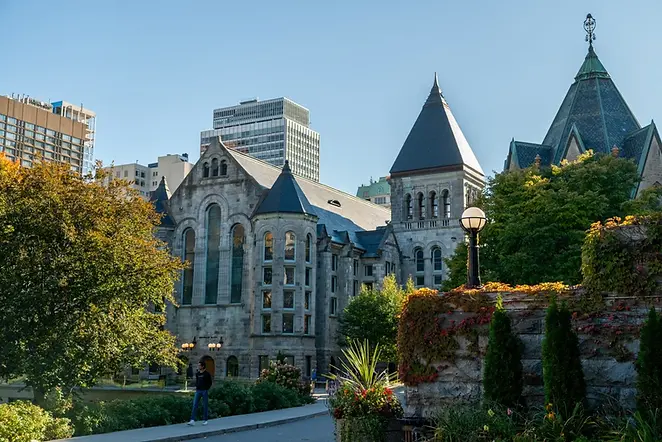
The downtown Montreal campus serves as McGill’s main campus. It contains historic buildings alongside modern research centers, libraries, lecture halls, laboratories, museums, student residences, athletic facilities, and cultural venues.
Macdonald Campus
Located in Sainte-Anne-de-Bellevue, the Macdonald Campus focuses on agriculture, environmental science, nutrition, food science, animal biology, and sustainable resource management. It provides extensive research farms, laboratories, and specialized teaching facilities.
Academic Structure
McGill University consists of numerous faculties and professional schools offering comprehensive academic programs.
Faculty of Arts
Programs include history, political science, sociology, psychology, economics, philosophy, anthropology, languages, communication studies, and international development.
Faculty of Science
Students study biology, chemistry, physics, mathematics, earth sciences, atmospheric science, neuroscience, statistics, and environmental science through classroom instruction and laboratory research.
Faculty of Engineering
The Faculty of Engineering offers internationally respected programs in civil engineering, mechanical engineering, electrical engineering, software engineering, mining engineering, chemical engineering, bioengineering, and materials engineering.
Faculty of Medicine and Health Sciences
This faculty provides education in medicine, nursing, dentistry, public health, biomedical sciences, rehabilitation sciences, and clinical research while working closely with affiliated teaching hospitals.
Desautels Faculty of Management
The Desautels Faculty of Management offers undergraduate and graduate programs in accounting, finance, marketing, international business, entrepreneurship, operations management, business analytics, and organizational leadership.
Faculty of Law
McGill’s Faculty of Law is internationally recognized for its integrated approach to legal education, combining civil law and common law traditions while emphasizing international perspectives.
Popular Academic Programs
- Medicine
- Computer Science
- Software Engineering
- Artificial Intelligence
- Data Science
- Business Administration
- Accounting
- Finance
- Economics
- Law
- Mechanical Engineering
- Civil Engineering
- Electrical Engineering
- Chemical Engineering
- Psychology
- Political Science
- Environmental Science
- Biotechnology
- Neuroscience
- Public Health
Admissions
Undergraduate Admission
Applicants must normally complete recognized secondary school qualifications with strong academic performance. Required documents generally include official transcripts, proof of English language proficiency where applicable, and program-specific requirements.
Graduate Admission
Applicants usually require a recognized bachelor’s degree, academic transcripts, letters of recommendation, a statement of purpose, and supporting materials depending on the chosen program.
Doctoral Admission
PhD applicants normally submit a research proposal, curriculum vitae, academic records, recommendation letters, and evidence of previous research experience.
English Language Requirements
International applicants whose first language is not English are generally required to demonstrate English language proficiency. McGill University accepts several internationally recognized English language tests. Minimum score requirements vary depending on the faculty and academic program. Applicants should ensure that official test results are submitted before the application deadline.
- IELTS Academic
- TOEFL iBT
- PTE Academic
- Other approved English language qualifications accepted by the university
Application Process
Step 1: Choose a Program
Applicants should carefully review the available undergraduate or graduate programs and ensure they meet all admission requirements before applying.
Step 2: Complete the Online Application
Applications are submitted through McGill University’s official online admission portal. Applicants should complete every section accurately and upload all required supporting documents.
Step 3: Submit Required Documents
- Academic transcripts
- Graduation certificates
- English language test scores (if applicable)
- Letters of recommendation (for selected programs)
- Statement of purpose or personal statement
- Curriculum Vitae for graduate applicants
- Portfolio for selected creative programs
Step 4: Receive Admission Decision
Applications are reviewed by the respective faculty. Successful applicants receive an official offer of admission through the university’s online system.
Tuition Fees
Tuition fees depend on the student’s residency status, degree level, faculty, and program of study. International tuition fees are generally higher than those for Canadian students. Students should also budget for accommodation, food, transportation, books, health insurance, and personal expenses.
Scholarships and Financial Aid
McGill University offers numerous scholarships, bursaries, grants, and financial assistance programs to recognize academic excellence and support students with financial need.
- Entrance Scholarships
- Major Entrance Scholarships
- Merit-Based Awards
- Need-Based Financial Assistance
- Graduate Fellowships
- Research Scholarships
- International Student Scholarships
- Faculty-Specific Awards
Research Excellence
Research is one of McGill University’s greatest strengths. The university is internationally recognized for discoveries in medicine, neuroscience, artificial intelligence, biotechnology, engineering, climate science, public health, environmental sustainability, and social sciences.
Researchers collaborate with governments, hospitals, industries, and universities worldwide to develop innovative solutions to global challenges. Students at undergraduate and graduate levels have opportunities to participate in research projects alongside internationally respected faculty members.
Libraries
McGill University operates one of Canada’s largest academic library systems. Students have access to millions of books, journals, research databases, archives, multimedia resources, rare collections, and digital learning materials.
- Quiet study areas
- Collaborative learning spaces
- Computer laboratories
- Research support services
- Digital collections
- Academic writing assistance
Student Life
Student life at McGill University is vibrant, diverse, and multicultural. Students can participate in hundreds of clubs, societies, sports teams, cultural organizations, academic associations, volunteer groups, and entrepreneurship initiatives.
The university regularly hosts orientation programs, leadership workshops, research conferences, career fairs, cultural festivals, athletic competitions, and networking events throughout the academic year.
Student Clubs and Organizations
- Engineering Societies
- Business Associations
- Medical Student Organizations
- International Student Groups
- Volunteer Programs
- Entrepreneurship Clubs
- Debate Societies
- Music and Performing Arts Groups
- Environmental Organizations
- Cultural Associations
Sports and Recreation
Students have access to modern athletic facilities, fitness centers, swimming pools, indoor courts, outdoor playing fields, and recreational activities. McGill teams compete in numerous interuniversity sports competitions.
Accommodation
McGill offers several residence options for undergraduate and graduate students. On-campus residences provide furnished rooms, internet access, dining services, study areas, and community activities.
Students may also choose private apartments or shared housing located near the downtown campus, with excellent access to Montreal’s public transportation system.
Dining Services
The university provides a variety of dining halls, cafés, restaurants, and food outlets offering Canadian and international cuisine. Vegetarian, vegan, halal, and other dietary options are widely available.
International Students
International students are an important part of the McGill community. The university offers extensive support services including orientation, immigration guidance, academic advising, language assistance, health services, career counseling, and cultural integration programs.
Exchange Programs
McGill maintains partnerships with universities around the world, allowing students to participate in semester exchanges, international internships, collaborative research, and study abroad opportunities while earning academic credit.
Innovation and Entrepreneurship
Students interested in entrepreneurship have access to innovation centers, startup incubators, mentorship programs, business competitions, and networking opportunities with successful entrepreneurs and investors.
Career Services
The university’s Career Planning Service assists students throughout their studies by offering career counseling, resume reviews, interview preparation, internship support, employer networking events, and job search resources.
Graduate Employability
McGill graduates are highly regarded by employers across Canada and internationally. Alumni work in healthcare, engineering, finance, technology, government, education, law, research, consulting, entrepreneurship, and multinational corporations.
Notable Alumni
- Prime Ministers
- Nobel Prize winners
- Rhodes Scholars
- Scientists
- Physicians
- Business executives
- Judges
- Authors
- Entrepreneurs
- International diplomats
Campus Facilities
McGill University provides modern facilities that support academic learning, scientific research, innovation, recreation, and student wellbeing. The university continually invests in new technologies and infrastructure to enhance the educational experience.
- Modern lecture theatres
- Advanced research laboratories
- Computer laboratories
- Engineering workshops
- Medical teaching facilities
- Innovation and entrepreneurship hubs
- University libraries
- Student residences
- Sports complexes
- Fitness centres
- Museums and galleries
- Student lounges
- Dining halls and cafés
- Health clinics
- Counselling services
- Prayer and reflection spaces
- Conference halls
- Bookstores
- High-speed campus Wi-Fi
Technology and Digital Learning
McGill integrates technology into teaching through online learning platforms, virtual classrooms, digital libraries, cloud-based collaboration tools, research software, and advanced computing facilities. Students can access course materials, assignments, recorded lectures, academic databases, and communication tools from anywhere.
Healthcare and Student Wellbeing
The university offers comprehensive health and wellness services including medical care, mental health counselling, wellness workshops, disability support, nutrition guidance, and peer support programs. These services help students maintain their physical and mental wellbeing throughout their studies.
Living in Montreal
Montreal is one of Canada’s most vibrant and culturally diverse cities. It is well known for its historic architecture, festivals, museums, theatres, restaurants, technology sector, and welcoming atmosphere. Students enjoy an excellent public transportation network, affordable cultural activities, and opportunities to experience both English and French-speaking communities.
Advantages of Studying in Montreal
- Multicultural environment
- Excellent public transportation
- World-class healthcare
- Strong technology industry
- Rich arts and cultural scene
- Safe and student-friendly neighbourhoods
- Numerous internship opportunities
- High quality of life
Internships and Practical Learning
Many McGill programs include internships, clinical placements, laboratory research, field studies, cooperative education opportunities, and industry projects. These experiences help students develop practical skills while building professional networks before graduation.
Global Partnerships
McGill University collaborates with hundreds of universities, research institutes, hospitals, government agencies, and international organizations across the world. These partnerships support academic exchanges, joint research, dual-degree opportunities, faculty collaboration, and international conferences.
Research Institutes
The university operates numerous specialized research centres dedicated to medicine, neuroscience, artificial intelligence, sustainable energy, environmental science, public policy, genomics, engineering, social sciences, and business innovation. These institutes contribute to scientific discoveries that have a global impact.
Sustainability Initiatives
McGill is committed to environmental sustainability through energy-efficient buildings, waste reduction programs, sustainable transportation, biodiversity conservation, green research initiatives, and climate action planning. Students are encouraged to participate in sustainability projects and environmental organizations.
Support Services
- Academic advising
- Writing support
- Mathematics and science tutoring
- Career counselling
- Immigration advising
- International student support
- Accessibility services
- Financial aid assistance
- Peer mentoring
- Leadership development programs
Application Tips
- Research your preferred academic program thoroughly before applying.
- Review all admission requirements carefully.
- Prepare official academic transcripts well in advance.
- Meet English language proficiency requirements if applicable.
- Submit all required supporting documents before deadlines.
- Apply early for scholarships and financial aid.
- Prepare a strong personal statement if required.
- Request recommendation letters early for graduate applications.
- Monitor your application status through the university portal.
- Plan accommodation before arriving in Montreal.
Interesting Facts About McGill University
- Founded in 1821, McGill is one of Canada’s oldest universities.
- Students come from more than 150 countries.
- The university has produced numerous Nobel Prize winners.
- McGill is internationally recognized for medical research.
- The downtown campus is located at the base of Mount Royal.
- Its library system is among the largest academic libraries in Canada.
- McGill researchers contribute to major international scientific discoveries.
- The university has a strong reputation for graduate employability.
Future Vision
McGill University continues to invest in innovative teaching methods, advanced research infrastructure, sustainability initiatives, interdisciplinary collaboration, digital learning, and international partnerships. The university aims to educate future leaders who can address complex global challenges through knowledge, creativity, and responsible leadership.